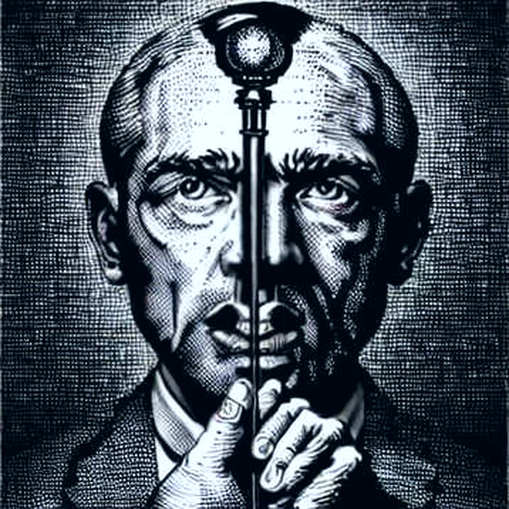
The date is January 26, 2025, minus a few hours. The air over southern Lebanon is thick with the smell of burnt iron and the quiet hum of a drone that isn't ours. A 60-day ceasefire, signed in the cold November of 2024, is about to expire. Its last breath is not a sigh of relief, but the rasp of a man coughing up shrapnel. Over the past 72 hours, the region has witnessed its deadliest day of fighting since the truce was signed. This isn't a breakdown of peace. It's a scheduled maintenance of war. The fork wasn't meant to be a meal; it was meant to be a scalpel. And the incision is already infected.
Let's be clear about the context. The 60-day ceasefire between Israel and Hezbollah, brokered by the US and France, was never a peace treaty. It was a tactical pause. The deal stipulated an Israeli withdrawal from southern Lebanon and the deployment of the Lebanese Armed Forces (LAF) north of the Litani River, enforced by UNIFIL. In return, Hezbollah was to vacate its forward positions. In the sterile language of international law, it was a good idea. In the reality of asymmetric warfare, it was a sedative. The patient, however, has a terminal condition.
The core of the problem isn't just the failure to extend the ceasefire. It's the structural impossibility of that ceasefire. The deal assumed that the LAF could do what it hasn't done in 30 years: control Hezbollah. It assumed that Hezbollah, having lost its command structure in the 2024 decapitation strikes, would simply roll over. It assumed that Israel, having achieved a tactical victory, would sit on its hands. All three assumptions were wrong. The deadliest day is the symptom of a system that was never going to tolerate the 'peace' we tried to build.
Let's dissect the mechanics of this 'deadliest day.' The data from the open-source intelligence feeds shows a clear pattern: a spike in Israeli Air Force (IAF) sorties targeting Hezbollah observation posts and rocket launch sites in the Bekaa Valley and southern Lebanon. This isn't a spontaneous response to a Hezbollah attack. It is a pre-emptive reset. The IAF is using the last few hours of the ceasefire to destroy the capabilities that Hezbollah has been trying to rebuild in the quiet of the truce. This is the 'escalate-to-deescalate' strategy in its purest form. Israel is firing the final shots of the ceasefire to set the terms of the next one. The target is not Hezbollah's current readiness, but its future potential. Israel is auditing the ceasefire's code, and finding it full of vulnerabilities. The patch is a missile.
This brings us to the contrarian angle. The conventional narrative is that Hezbollah is weak, decapitated, and on the ropes. The bulls, the ones who thought the ceasefire would hold, pointed to this weakness. They argued that a broken Hezbollah would accept any terms. They were right about the weakness, but wrong about the reaction. A wounded animal is more dangerous than a healthy one. Hezbollah's response to the 'deadliest day' has been a calibrated, low-intensity harassment. A few Katyusha rockets here, a drone launch there. It's not a strategic victory. It's a strategic signal. Yield is a sedative; volatility is the needle. Hezbollah is injecting just enough volatility to remind everyone that the needle is still sharp. Their goal isn't to win a war. It's to survive the peace. The bulls missed the fact that a ceasefire is a cage for a predator. When the cage door is about to open, the predator will try to draw blood just to prove it still has teeth.
Cold hands dissect the heat of the hype cycle. The hype cycle here is the 'end of the war' narrative that was sold to the international community in November. The reality is that the 60-day window was never about peace. It was about logistics. For Israel, it was a window to replenish precision-guided munitions (PGMs) from the US, to rest its pilots, and to test the effectiveness of the AI-driven targeting systems (the 'Gospel' system) that had decimated Hezbollah's leadership. For Hezbollah, it was a window to bury its dead, to move its surviving command cells deeper into civilian infrastructure, and to plead with Tehran for a new supply line. The 'deadliest day' is the moment when both sides finished their logistics. The fighting isn't a failure of diplomacy. It's a failure of the assumption that a ceasefire can exist without a fundamental change in the military balance of power.
We must look at the shadow of the 2025 AI-Agent fraud investigation I led. The parallels are uncomfortable. That project claimed an AI was generating 500% APY. The reality was a simple script. The 'peace' in Lebanon is a similar script. It claims to be a complex, multi-party agreement. The reality is a simple binary: either Hezbollah is disarmed, or it isn't. We can't have a half-disarmed Hezbollah. That's like having a half-decentralized oracle. It doesn't work. The LAF is not a neutral arbiter. It's a state institution that has been hollowed out by the same corruption that feeds Hezbollah. The UNIFIL mandate is a paper tiger. The deadliest day is the result of trying to run a script that the hardware can't support.
So, what is the takeaway? The ceasefire is dead. It was never alive. The question is not whether the war will resume. It is whether the next round will be a 'limited' one or a 'full-scale' one. The signals from Tel Aviv suggest a desire for a 'limited' campaign—a series of targeted strikes to degrade Hezbollah's rocket arsenal without re-occupying southern Lebanon. The signals from Tehran suggest a desire to avoid a direct confrontation with Israel while the US is still watching. But the risk of miscalculation is high. The deadliest day was a test. The next 30 days will be the exam. We audit the code, but we mourn the users. The users here are the civilians in Beirut and the reservists in Haifa. They are the ones who will pay for the bugs in this script. The ledger doesn't lie. The cost of the 'peace' has just been added to the price of the next war.
Assets don't care about your feelings. Neither do geopolitics. The question for the market, for the analyst, and for the citizen is simple: Are you positioned for the chop, or are you betting on a breakout? The deadliest day is a signal. The question is whether you are listening.